
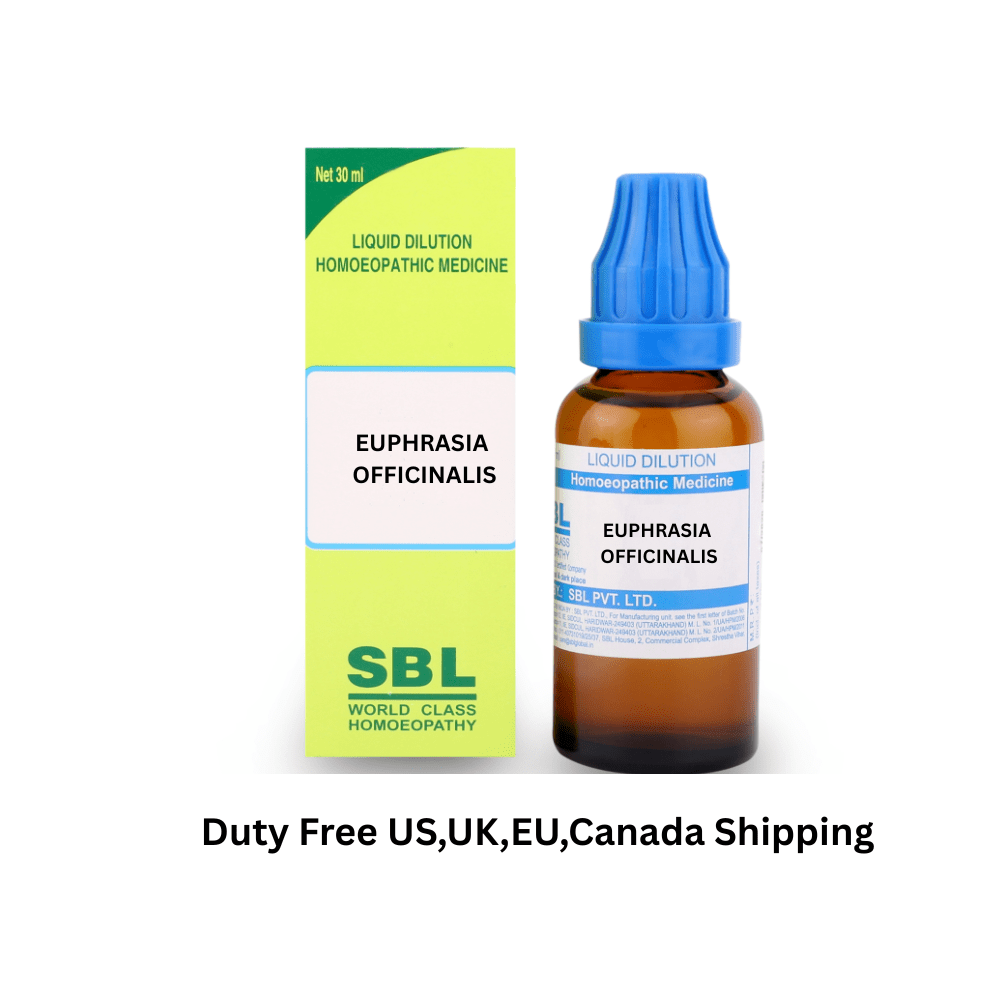
SBL Euphrasia Officinalis Dilution, commonly known as Eyebright, comes from the flowering herb Euphrasia officinalis of the Scrophulariaceae family. Traditionally, healers have recognized this plant for treating eye disorders, allergies, and respiratory complaints. In homoeopathy, Euphrasia officinalis directly targets eye irritation, profuse watering of the eyes, and bland coryza. As a result, practitioners also prescribe this remedy for loose coughs, hoarseness, and catarrhal conditions affecting the eyes and nose.
Common Name
English: Eyebright
Therapeutic Uses of SBL’s Euphrasia officinalis
Conjunctivitis
To begin with, Euphrasia officinalis treats inflammation of the conjunctiva with profuse, acrid lachrymation. In addition, it produces thick, excoriating eye discharge with sticky mucus on the cornea. Furthermore, the remedy addresses burning and swelling of the eyelids, frequent blinking, corneal blisters, opacity, eye pressure, and heightened sensitivity.
Coryza
Likewise, the remedy relieves profuse, fluent nasal discharge. At the same time, patients experience violent coughing with abundant expectoration.
Catarrhal Affections
More broadly, Euphrasia officinalis acts on inflamed mucous membranes, especially of the eyes and nose. Notably, symptoms worsen in the evening.
Whooping Cough
During the daytime, the remedy controls coughing spells and, simultaneously, produces profuse watering of the eyes.
Influenza
In influenza cases, patients develop fluent morning coryza. Additionally, frequent yawning appears while walking in open air.
Headache
In many cases, Euphrasia officinalis relieves bursting headaches associated with dazzling of the eyes. Moreover, these headaches often accompany catarrhal symptoms with profuse discharge from the eyes and nose.
Vomiting
Consequently, the remedy stops vomiting that follows constant hawking of mucus.
Nausea and Bitterness
Similarly, patients report nausea and a bitter taste, particularly after smoking.
Bowel Disorders
In gastrointestinal complaints, Euphrasia officinalis addresses dysentery and prolapsed anus. At the same time, it relieves constipation with a strong downward pressure while sitting.
Menstrual Problems
In women’s health concerns, the remedy helps painful menstruation that appears late, remains scanty, or ends quickly. Furthermore, it addresses amenorrhea linked with eye inflammation.
Measles
During the first stage of measles, eye symptoms dominate and, therefore, respond well to Euphrasia officinalis.
Injuries
Following external injuries, the remedy supports recovery when skin symptoms appear.
Yawning
Frequently, patients yawn excessively, especially while walking in open air. Along with this, daytime sleepiness often develops.
Fever
Finally, patients experience chills and cold sensations. At the same time, sweating occurs mainly on the chest during sleep.