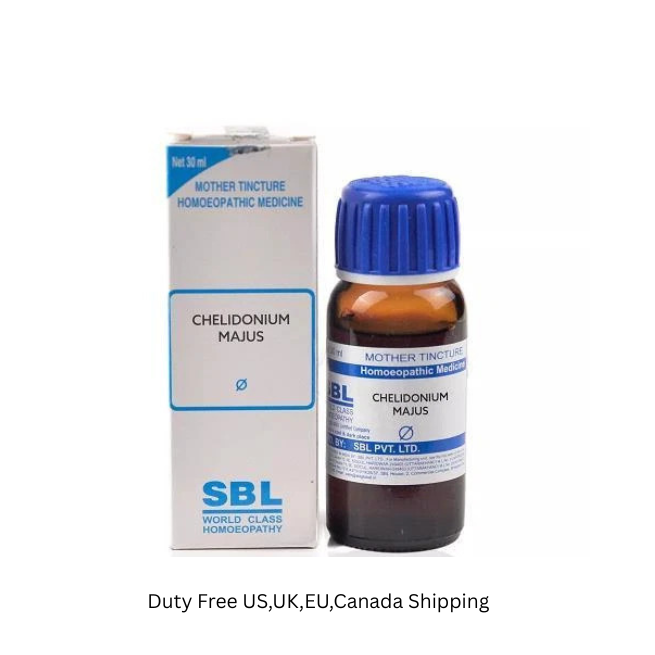
SBL Chelidonium majus Mother Tincture Q, commonly called Greater Celandine, comes from the flowering plant Chelidonium majus, a member of the Papaveraceae family. Traditional systems have long associated this plant with liver and biliary balance. In homoeopathic practice, Chelidonium majus is known for patterns linked to liver stress, bile flow imbalance, and discomfort that centers on the right side of the body.
Common Name
English: Greater Celandine
Symptom Patterns Commonly Linked with Chelidonium majus
Liver and Gallbladder Focus
Chelidonium majus aligns strongly with liver-related imbalances. It is often associated with signs of sluggish liver activity and disturbances involving bile flow. People experiencing issues connected to gallstones or bile congestion may show symptom patterns that correspond with this remedy profile.
Right-Sided Abdominal Discomfort
A defining feature is discomfort concentrated on the right side of the abdomen. This sensation often appears alongside liver or gallbladder strain and may feel deep or persistent.
Biliary Colic Patterns
Chelidonium majus is closely connected with intense abdominal cramping linked to bile duct obstruction, especially when pain builds and releases in waves.
Jaundice-Like Signs
This remedy profile includes yellowing of the skin or eyes and pale, clay-colored stools, commonly associated with disrupted bile processing.
Chest and Back Sensations
Some individuals experience chest discomfort accompanied by coughing. The sensation may extend to the back, especially beneath the right shoulder blade, reflecting the liver–gallbladder connection.
Characteristic Pain Location
Pain beneath the right shoulder blade stands out as a key identifying feature. This right-sided emphasis plays a central role in recognizing the Chelidonium majus symptom picture.